
The ANT


A framework for a novel, forecast-triggered anticipatory disaster finance mechanism
Climate disasters are becoming more frequent, more severe, and more expensive. Studies show that interventions before disasters strike are the most cost-efficient way to reduce loss and damage. According to the WFP and the FAO, every $1 invested in anticipatory action yields $7-$34 in avoided costs. The UNDP states that even just 24 hours’ worth of early warning can reduce up to 30% of a disaster’s impacts. Yet financial protection continues to arrive after damage has already occurred.
The Anticipatory Natural Trigger (ANT) changes that.
Developed by GreenAnt, the ANT is a framework for a new class of anticipatory finance. It can be issued by a licensed 3rd party either as a forecast-based weather derivative or anticipatory parametric insurance. It transforms trusted weather forecasts into immediate financial protection. Instead of waiting for floods to happen, the ANT model releases funds before disaster strikes, giving organizations, businesses, and communities time to act when it matters most.
A new approach to climate protection
Traditional insurance is built around assessing losses after an event. Claims must be verified, damage assessed, and payments processed. This process can take weeks or months.
The ANT outlines a model that is fundamentally different.
This model is a forecast-triggered financial instrument that activates automatically whenever independently verified, local weather forecasts indicate that rainfall is expected to exceed flood or drought thresholds within a defined area. These sophisticated, dynamic disaster thresholds upon which the ANT is based are defined by GreenAnt’s Desidera platform and linked to predefined payout values. Unlike traditional insurance, these payouts do not compensate for disaster-driven losses. Instead, they cover preemptive mitigation protocols that beneficiaries can take to protect their lives, livelihoods, and assets and reduce ultimate loss and damage.
Because the trigger is based on objective forecast data rather than damage assessments, payouts can be executed within hours and received days before a disaster strikes, enabling proactive action instead of reactive recovery.
The result is faster access to capital, greater transparency, improved disaster response, and significantly lower operational complexity.
Please note: GreenAnt is not a licensed financial service provider. Nothing herein constitutes financial advice or an offer of any financial product or service. Any regulated activity relating to the structuring or issuing of the ANT would not be conducted by GreenAnt and would be subject to applicable law and appropriately licensed providers.
How the ANT works
ANT contracts, which are issued by 3rd party licensed providers, are built using GreenAnt's proprietary climate intelligence platform, Desidera.
Desidera combines satellite imagery, hydrological modeling, meteorological forecasts, AI, and high-resolution Digital Twins to identify the meteorological conditions (i.e. accumulated rainfall), corrected for local geophysical and hydrological traits of an area, that lead to flooding and droughts in that specific location.
These scientifically-calibrated thresholds are based on forecasts. That means that they can be recognized and anticipated in weather forecasts before a disaster actually strikes. They become the foundation of each ANT contract.
Here’s how our framework works:
1. Model the risk
Desidera identifies localized flood or drought thresholds for a client’s specific area, down to a single address.
2. Structure the contract
A licensed 3rd-party capacity provider uses Desidera’s disaster thresholds to create a forecast-based index tailored to the area of interest. Each index will serve as the basis for the pre-defined payouts, with a payout being linked to a specific threshold (for example, a forecast of 500ml rainfall over 24 hours triggers fund distribution). The client pays the capacity provider a small premium. The provider then issues the official derivative or parametric policy contract structured around the index.
3. Monitor forecasts
Desidera automatically ingests local weather forecasts around the area of interest to continuously monitor expected conditions and signal whether a disaster threshold is met therein.
4. Trigger automatically
If a disaster threshold is recognized in a forecast, a disaster is effectively predicted, and Desidera sends out an automatic notification. The partner capacity provider that issued the contract receives the signal and immediately distributes the pre-defined payout that is correlated to the recognized threshold.
5. Release liquidity
Payouts are confirmed within hours (subject to contract scope), allowing beneficiaries to take early action before flooding occurs.
No claims adjustment. No loss verification. No uncertainty.
Just transparent, preemptive financial protection that builds climate resilience while saving costs for all involved.
Built for anticipatory action
Early action saves lives, protects livelihoods, and reduces economic losses.
The ANT framework allows for organizations to access the capital needed to act before disasters unfold, expanding access to protection in regions where conventional insurance struggles to operate.
Humanitarian anticipatory action programs
Government disaster preparedness funds
Climate resilience financing
Agricultural protection
SME and supply chain resilience
Microinsurance and embedded insurance products
Industrial flood risk management
Corporate climate risk transfer
Humanitarian anticipatory action programs Government disaster preparedness funds Climate resilience financing Agricultural protection SME and supply chain resilience Microinsurance and embedded insurance products Industrial flood risk management Corporate climate risk transfer
Potential applications include:
Humanitarian anticipatory action programs
Government disaster preparedness funds
Climate resilience financing
Agricultural protection
SME and supply chain resilience
Microinsurance and embedded insurance products
Industrial flood risk management
Corporate climate risk transfer
Stakeholders in each sector can design tailored mitigation plans to determine the most effective way to deploy pre-determined, preemptive disaster funds and reduce loss and damage. Whether protecting vulnerable communities or critical business operations, with the ANT framework, 3rd-party financial service providers deliver capital when it has the greatest impact. Not after it is too late.
Powered by Desidera
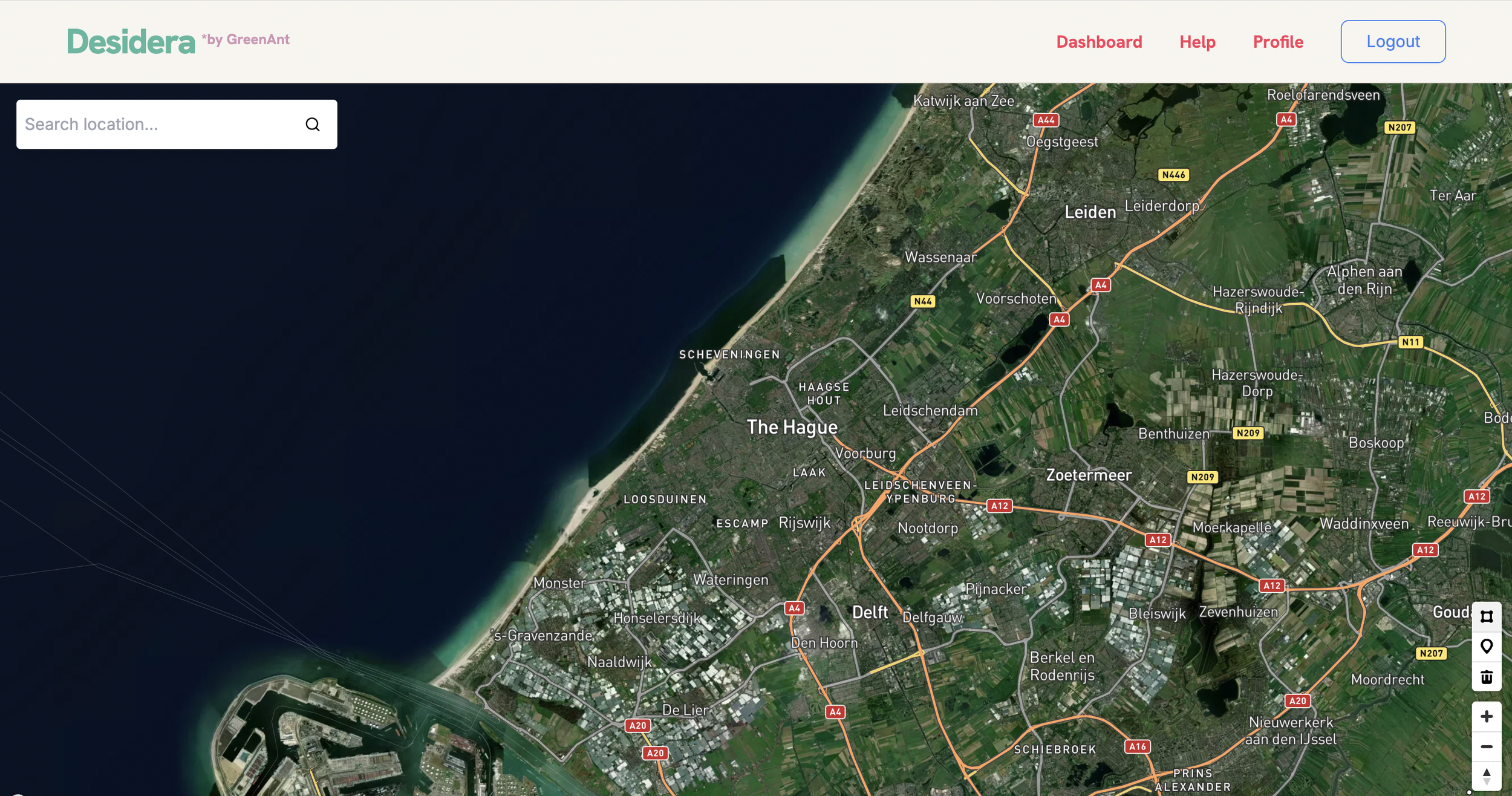
At the core of the ANT framework is Desidera, GreenAnt's proprietary climate intelligence platform. Unlike conventional flood models that rely on broad regional estimates, Desidera creates highly detailed Digital Twins that capture local terrain, hydrology, soils, land cover, and historical flood behavior at resolutions of just a few meters.
This enables Desidera to identify location-specific flood and drought thresholds with exceptional accuracy.
Each threshold is calibrated and validated against satellite and meteorological data, creating a transparent and scientifically grounded foundation for financial products.
The result is a new generation of climate intelligence that connects environmental science directly to financial decision-making.
Desidera integrates seamlessly into existing financial infrastructure.
Whether structured as a short-duration, over-the-counter weather derivative or an anticipatory parametric insurance product, the technology that underpins the ANT framework enables insurers, reinsurers, institutional investors, and capacity providers to issue forecast-based financial products structured using familiar legal and operational work flows while accessing a new category of climate-linked risk.
For issuers of traditional, loss-based insurance, the ANT framework complements your current offerings. Because preemptive payouts reduce post-event loss and damage, products based on our ANT framework can be issued as part of a package to your clients, reducing claims and lowering the payouts you need to issue after a disaster has taken place.
Designed for capital markets
For capital providers, the ANT offers:
Short-duration exposure
Transparent and objective trigger mechanisms
Diversified climate risk
Low operational complexity
Scalable portfolio construction
Measurable climate impact
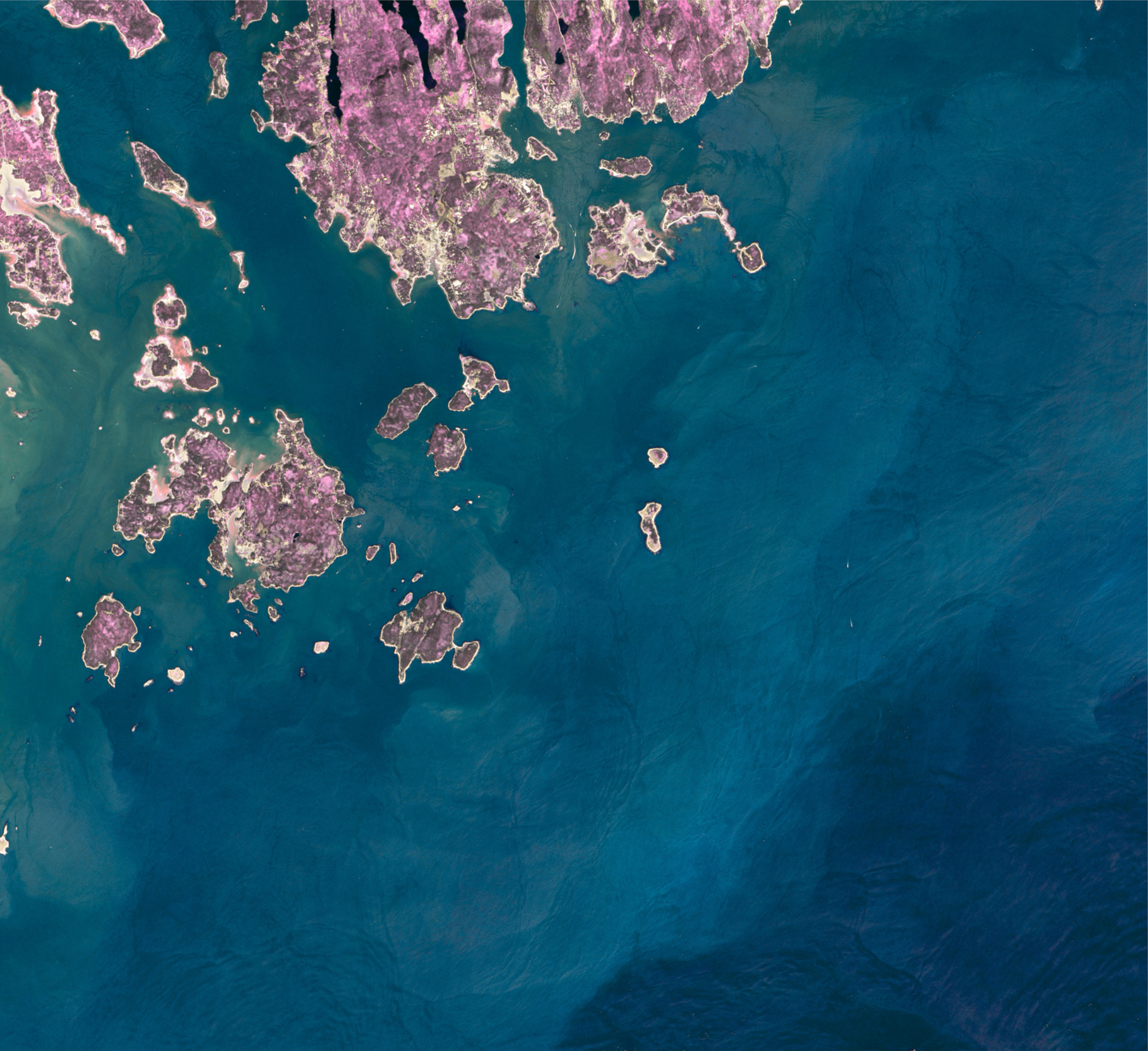
Proven through real-world modeling
GreenAnt has validated the risk analysis technology behind the ANT using multiple years of hydrological, meteorological, and satellite observations across Southeast Asia, Europe, Latin America, and beyond.

Closing the global protection gap
Across the world, climate risks are increasing faster than traditional insurance can adapt. Donor hesitancy and a volatile geopolitical landscape put humanitarian contingency funds at risk.
Millions of households, businesses, and public institutions remain exposed because protection is too expensive, unavailable, or arrives too late.
The ANT model for climate finance unlocks new streams of capital for risk managers of all stripes. With the ANT, contingency funds are optimized. In some cases, it may be that such funds no longer need to cover the entire projected cost of a disaster. Instead, they need only cover a premium that’s just a fraction of the total available ANT payout distributed in the event of a disaster. By connecting climate intelligence with financial markets, GreenAnt is helping build a future where at-risk communities and enterprises are actually empowered by these financial markets, where the most vulnerable are not blocked from protection due to high exposure, and where resilience begins before disasters happen.
Ready to build anticipatory protection?
Whether you are an insurer, reinsurer, NGO, development bank, government agency, fintech, or institutional investor, GreenAnt can help design forecast-triggered protection tailored to your region and risk profile.
Get in touch to explore how the ANT framework can support your climate resilience strategy - or how you can partner with us and issue this game-changing tool to your own network.