
The Economics of Waiting: What Delayed Climate Response Actually Costs
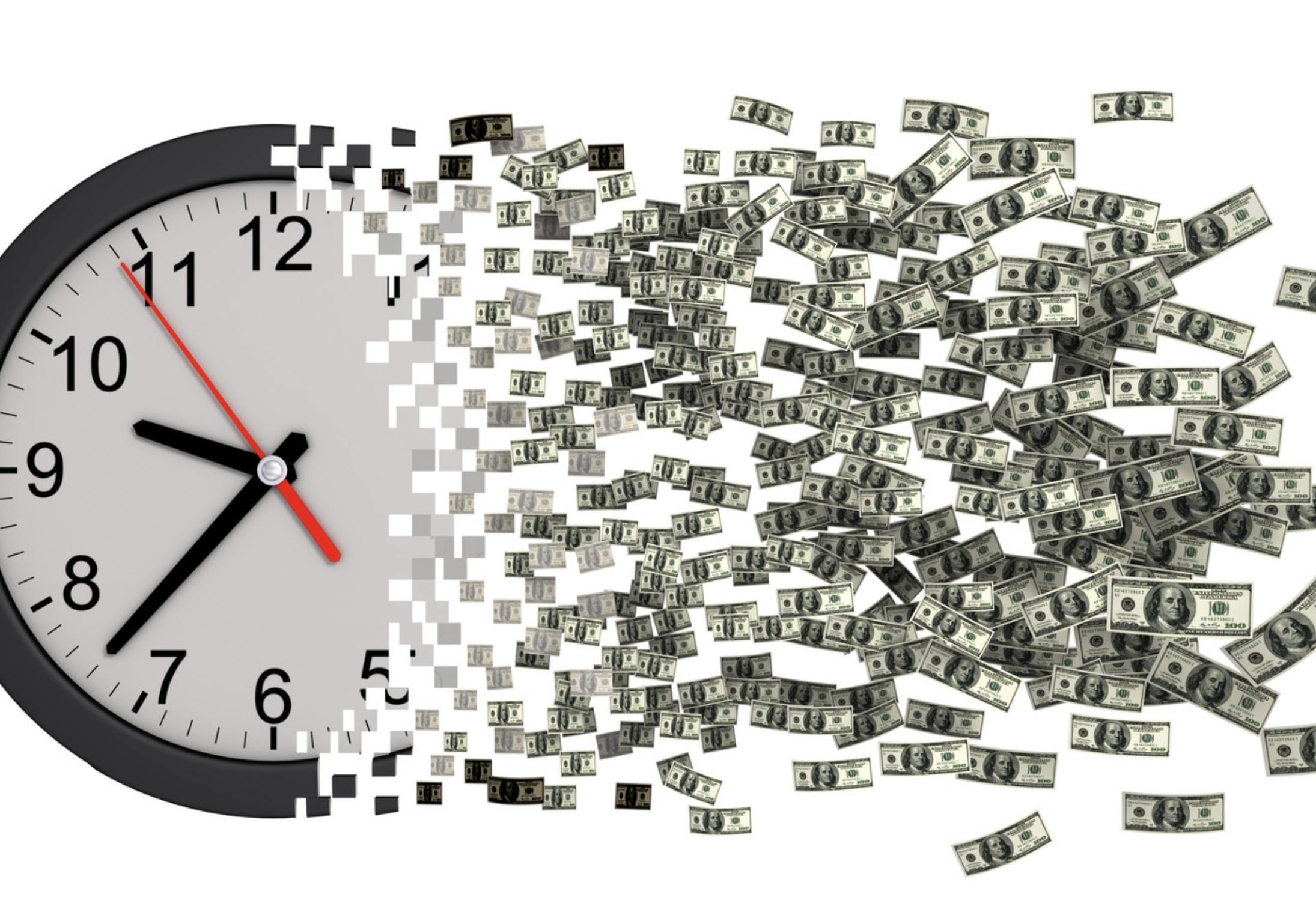
Introduction: The True Price of "Wait and See”
Reactive climate response appears cost-effective on paper. Prevention budgets draw scrutiny. Early warning investments face skepticism. Pre-positioning resources seems expensive—until the disaster hits.
Then the real costs become visible: emergency procurement at higher-than-normal rates, supply chains paralyzed for months, communities that never recover between climate shocks. Organizations operating under reactive assumptions aren't saving money; they're accumulating hidden liabilities that compound with each delayed decision.
This analysis quantifies what waiting actually costs across humanitarian aid, emergency management, and insurance sectors—and demonstrates why climate risk prevention consistently delivers better financial outcomes than disaster response.
The Illusion of Savings: Why Reactive Budgets Fail
Prevention costs appear immediately in budget lines. The costs of inaction remain invisible until crisis forces them into emergency declarations, supplemental appropriations, and expedited procurement at premium rates.
Traditional cost-benefit analysis systematically undervalues climate adaptation because standard accounting captures direct disaster losses while ignoring operational disruptions, supply chain failures, and institutional capacity erosion. The "fiscal year" framework forces optimization for twelve-month cycles rather than multi-year risk reduction, creating perverse incentives that reward deferral.
Insurance actuaries increasingly recognize this pattern: reactive approaches transfer climate risk without reducing it. Premium escalation eventually makes coverage unaffordable or unavailable precisely where it's needed most. When insurers withdraw from high-risk markets, uninsured losses fall back on government balance sheets and humanitarian caseloads—the costs don't disappear, they just move.
Direct Disaster Costs: The Visible Fraction
According to the UN Office for Disaster Risk Reduction (UNDRR), direct economic losses from natural disasters—earthquakes, floods, landslides—total approximately $200 billion annually worldwide. These are the costs that make headlines: destroyed infrastructure, damaged property, immediate relief expenses.
But direct losses represent less than 10% of total economic impact. When cascading effects and ecosystem degradation are factored in, annual disaster costs exceed $2.3 trillion globally. Reactive models focus almost exclusively on that visible $200 billion while ignoring the hidden $2.1 trillion.
For humanitarian organizations, this means exponentially higher deployment costs when responding to predictable climate events without advance positioning: emergency airlift rates, surge staffing premiums, competition for limited supplies when multiple crises erupt simultaneously.
Emergency management agencies absorb these costs through federal-level disaster declarations, rescue and relief team deployments, and other disaster assistance that dwarf what preventive infrastructure and early warning systems would have required.
Commercial insurers face loss ratios that render entire markets unsustainable, triggering market withdrawal that leaves protection gaps no one else can fill.
Operational Disruption: When Downtime Compounds
Every climate disaster creates operational paralysis that cascades through dependent systems. Each day of disruption costs organizations multiples of the direct physical damage—and these costs multiply the longer response is delayed.
Humanitarian supply chains experience disruptions that extend response timelines by weeks or months. Pre-positioned resources could reach vulnerable populations in 48-72 hours. Reactive mobilization takes 2-3 weeks minimum, sometimes months when logistics infrastructure is damaged. That delay directly translates to preventable mortality, malnutrition, and disease in affected populations.
Government services face prolonged interruptions that cascade into secondary crises: hospitals without power, schools converted to shelters, water treatment offline. Each service disruption requires additional emergency funding to address consequences that prevention could have avoided.
Commercial operations lose revenue throughout extended recovery periods that stretch far beyond the disaster itself. Small and medium enterprises face a 25% closure rate within one year of major climate events—permanent economic damage that reactive response cannot reverse.
Supply Chain Cascades: When Single Points of Failure Multiply
Modern supply chains create vulnerability networks where one climate event triggers failures across multiple supplier tiers, multiplying costs exponentially as disruptions propagate.
Humanitarian organizations discover this inflationary phenomenon during simultaneous emergencies: delayed response to early warning signals creates supply bottlenecks when multiple agencies compete for limited resources. Medical supplies, emergency shelter materials, water purification equipment—all become scarce precisely when demand peaks across regions.
Emergency management agencies face critical shortages because reactive procurement cannot scale fast enough to meet sudden demand spikes across multiple jurisdictions. Temporary housing, generators, emergency communications equipment—reactive systems consistently fail to deliver when needed most.
Insurance markets experience correlated losses that stress capital reserves when multiple climate events occur in close succession. Hurricane, wildfire, flood—insurers face simultaneous claims that force reinsurance costs upward and create systemic financial risk that threatens market stability.
Reputational Costs: When Trust Erodes
Institutional credibility deteriorates with each inadequate response, creating a trust deficit that makes future operations more expensive as communities lose confidence in organizational capacity.
For humanitarian NGOs, this manifests as donor fatigue. Recurring emergencies that reveal patterns of reactive crisis management rather than strategic risk reduction lead to funding reductions—directly impacting capacity to respond to future disasters when prevention could have broken the cycle.
Emergency management agencies face political consequences when repeated failures expose inadequate preparedness. Budget scrutiny intensifies, leadership turns over, institutional knowledge evaporates. The reactive approach that seemed financially conservative becomes a liability that undermines the agency's core mission.
Commercial insurers suffer brand damage and policyholder flight when claims processing delays and coverage disputes expose limitations in their risk models and response capacity. Trust, once lost in disaster response, takes years to rebuild—if it can be rebuilt at all.
Missed Prevention Windows: The Opportunity Cost of Delay
Climate science provides increasingly accurate forecasts of heightened risk periods—seasonal outlooks, sub seasonal predictions, even event-specific warnings days or weeks in advance. Yet reactive organizations systematically fail to capitalize on these windows.
Every ignored early warning represents a missed opportunity to prevent losses at a fraction of post-disaster response costs. Benefit-cost ratios for disaster risk reduction typically range from 3:1 to 15:1 depending on hazard type and intervention.
Humanitarian organizations that wait for crisis declarations before mobilizing miss the critical window when pre-impact interventions could prevent displacement, protect livelihoods, and stop the cascade from climate hazard to humanitarian disaster.
Emergency management agencies forego infrastructure hardening and nature-based solutions during calm periods, then face exponentially higher costs to rebuild after damage occurs—often to the same vulnerable standards that guarantee future failure.
Commercial insurers miss opportunities to incentivize prevention through premium structures and risk reduction services that would lower future loss ratios while maintaining market presence in climate-vulnerable regions.
The Compounding Effect: How Costs Multiply Over Time
Climate impacts don’t occur in isolation. Each poorly managed event weakens systems and reduces resilience, making communities more vulnerable to subsequent shocks and increasing the cost of each successive response.
Humanitarian organizations face expanding caseloads as recurring climate shocks create chronic vulnerability populations who never fully recover between events. Cyclical displacement, repeated asset loss, degraded health—these populations require sustained assistance that strains budgets designed for acute response.
Government infrastructure degrades under repeated climate stress without adequate resilience investment, creating a maintenance backlog that grows exponentially more expensive to address as systems approach failure thresholds. Roads, bridges, water systems, power grids—deferred maintenance today becomes emergency replacement tomorrow at multiples of preventive cost.
Insurance markets enter death spirals in climate-vulnerable regions where rising premiums drive out lower-risk policyholders, concentrating risk in the remaining portfolio and forcing further premium increases until markets collapse entirely.
The Prevention Advantage: What Early Action Saves
Organizations that invest in anticipatory approaches reduce disaster response costs by 30-50%while simultaneously improving outcomes for affected populations through faster, more effective interventions.
Humanitarian NGOs implementing forecast-based financing report savings of $3-7 for every dollar invested in pre-disaster action, while reaching vulnerable populations before displacement and asset loss occur. The World Meteorological Organization's Early Warnings for All initiative estimates that just $800 million invested in early warning systems in developing countries would prevent losses of $3-16 billion annually.
Emergency management agencies that prioritize resilient infrastructure and early warning systems achieve benefit-cost ratios ranging from 2:1 to 10:1, according to the Global Commission on Adaptation. These investments reduce demands on emergency response budgets that can be redirected to other community priorities.
Commercial insurers that incentivize disaster prevention through premium structures and provide pre-event risk reduction services experience lower loss ratios, improved customer retention, and sustainable market presence in regions where competitors have withdrawn.
Making the Transition: From Reactive to Anticipatory Economics
Moving from reactive to anticipatory approaches requires reframing budget processes to account for full lifecycle costs of climate risk rather than optimizing for single fiscal years.
Decision makers must demand cost analyses that include operational disruption, supply chain impacts, reputational damage, and compounding effects—not incomplete assessments that only quantify direct losses.
Cross-sector collaboration enables shared investment in early warning systems, pre-positioned resources, and resilient infrastructure that reduces costs for all stakeholders while closing protection gaps that currently fall through institutional boundaries.
The organizations that thrive amid accelerating climate risk will be those that recognize disaster prevention as an investment with measurable returns, not an expense to minimize.
Conclusion: The Economics Are Clear
The evidence demonstrates that reactive climate response consistently costs 3-7 times more than proactive investment when accounting for the full spectrum of direct, indirect, and compounding losses.
Decision makers face a stark choice: Invest now in anticipatory systems that reduce climate risk and deliver cost savings, or continue absorbing exponentially growing expenses that make organizational missions increasingly unsustainable.
The economics of waiting aren't conservative or prudent. They represent a systematic transfer of preventable costs from today's budgets to tomorrow's balance sheets, where they arrive multiplied and often unmanageable.
Organizations that act now to embed anticipatory approaches will find themselves not only fulfilling their missions more effectively but operating more efficiently in a climate-changed world that rewards foresight and punishes delay.
The question isn't whether you can afford to invest in climate adaptation and disaster prevention. It's whether you can afford not to.