
Introduction: Why the Resilience Dividend Matters Now
Natural catastrophes caused US$220 billion in economic losses in 2025, and only about 49% of those losses were insured. That was the highest insured share in Swiss Re Institute records. In emerging economies, the picture is far worse: Swiss Re reports that 80% to 90% of catastrophe losses typically go uninsured.
A group of senior insurance insiders added a warning of their own. In a recent memo titled "Sounding the Alarm," they argued that parts of the industry are underestimating physical climate risk and that the industry's default response could widen this protection gap even further.
There is a way to reverse this path. In this post, we explore the concept of the “resilience dividend:” What it is, the evidence that it pays, and why investing ahead of disaster may be one of the most effective ways to keep climate risk insurable and keep the protection gap from widening.
What Is the Resilience Dividend?
The term was popularized by Judith Rodin in her 2014 book The Resilience Dividend, written while she was president of the Rockefeller Foundation. Rodin used it to describe the gains that come when resilience helps people and places both withstand shocks and improve everyday life. In 2015, ODI and the World Bank's Global Facility for Disaster Reduction and Recovery (GFDRR) extended the idea into a "triple dividend" of resilience: avoided losses, unlocked economic potential, and co-benefits that accrue even if no disaster strikes.
A June 2026 report from ClimateWise at the University of Cambridge Institute for Sustainability Leadership (CISL) brings the concept to insurance. The report calls insurability one of the earliest signals of whether assets, sectors, and economies can withstand physical climate risk. When insurance retreats, mortgages, property values, tax bases, and investment follow.
The ClimateWise report defines the resilience dividend as a virtuous cycle in which proactive investment in resilience reduces risk, helps keep insurance affordable, and reinforces the conditions for further adaptation. The link between insurability and resilience, it explains, is self-reinforcing in both directions. Without insurance, recovery slows, resources for adaptation shrink, and risk reduction is neglected, which perpetuates a vulnerability spiral. With sustained investment in resilience, the cycle turns the other way. Future insurability, the report concludes, is "substantially a function of policy and investment choices made today."
To help guide those choices, the report introduces the Insurability Readiness Matrix, a tool insurers can use to rate seven readiness components as Red, Amber, or Green: data and modeling, physical resilience, policy alignment, market capital and capacity, stakeholder awareness and financial literacy, accessibility and affordability, and recovery ecosystem. Each rating comes with "pathways to Green" that name the actions and stakeholders needed to improve it.
The Evidence That Resilience Pays
The return on resilience is well documented. The National Institute of Building Sciences found that federal mitigation grants save $6 for every $1 spent, and that adopting modern building codes saves $11. FEMA estimates that Florida's resilient building codes avoid more than US$1 billion in losses each year across more than one million structures. The FAO and WFP found that every $1 invested in anticipatory disaster mitigation saves $7 in short-term recovery costs and $34 in long-term recovery costs.
The pattern holds for single properties and whole communities alike. JBA modeling for Flood Re's Build Back Better scheme found that if just 4.1% of at-risk UK properties installed property flood resilience measures, a £3.2 billion investment, yearly flood losses could fall by £453 million under a worst-case 2050 climate scenario, paying back the investment in just over seven years. The ClimateWise report also cites a California Department of Insurance study finding that rebuilding the communities lost in the 2025 Palisades and Eaton fires to the IBHS Wildfire Prepared Home standard could cut projected wildfire losses by one-third.
The logic behind the resilience dividend is intuitive: If we invest in sustainable resilience efforts before destructive climate events occur, we reduce loss and damage caused by those events and avoid more expensive investments that are needed for post-disaster recovery.
Insurability Under Pressure
The insurance industry's current trajectory relative to climate risk is troubling. On October 14, 2026, a group of anonymous senior UK and European insurance and reinsurance professionals published "Sounding the Alarm," a memo warning that parts of the industry are underestimating physical climate risk. The memo's authors report that many firms are ignoring the threat of climate risk and failing to consider (or, in some cases, intentionally overlooking) the true implications it has on their operations. The memo says that climate barely ranks among the top three boardroom issues at many firms, that some insurers rely on outdated catastrophe models or cannot afford good data, and that modelers at some firms face pressure to trim forward-looking estimates in an effort to downplay risk. The result is a growing disparity between the policies insurers issue and the actual risk policyholders face.
The memo describes what the industry tends to do when it does react to high risk: raise prices, narrow cover, and withdraw from exposed geographies and sectors. Its authors present this response as a problem driven by short-term incentives, because these strategies only land more uninsured losses on households, businesses, and taxpayers.
The authors also warn that these phenomena could undermine the mortgage market, much as subprime lending did before the Global Financial Crisis.
Read alongside the ClimateWise report, the stakes of overlooked risk become clear. Each stage of the insurance industry’s default response widens the protection gap and feeds the vulnerability spiral the report describes. The durable way out is not only for insurers to increase transparency, but also for communities, enterprises, and other stakeholders to reduce the risk itself.
Good Models Are Necessary but Not Sufficient
Better risk models are part of the answer. When the ClimateWise team surveyed insurers, reinsurers, and other stakeholders, data and modeling scored highest of the Insurability Readiness Matrix's seven readiness components, at 4.53 out of 5.
The payoff can be direct. In Lagos, open flood-zone data developed with the Lagos State Government, the World Bank, and the UK Foreign, Commonwealth and Development Office (FCDO) let insurers model risk at a finer scale. According to the ClimateWise report, technical premiums fell 25%, and the city launched its first parametric flood policy, covering 25,000 households.
Accurate models alone can cut the other way. As mentioned earlier, according to “Sounding the Alarm,” insurers sometimes rely on outdated models or trim forward-looking estimates to keep business flowing. Alternatively, when accurate, up-to-date models reveal that climate risk is very high, insurers may also retreat from the market or raise premiums until they become unaffordable. But the ClimateWise report also notes that precise UK flood mapping concentrated uninsurable risk, which helped lead to the creation of Flood Re, the UK's flood reinsurance scheme. The takeaway is that models pay a dividend when they drive action: resilience investment, early warning, and pre-arranged finance.
How Can Insurers Engage with Resilience?
When it comes to insurance, rewarding preparedness pays. In Vanuatu, according to the ClimateWise report, a premium subsidy tied to cyclone-resilient practices tripled uptake within a year, and the new enrollment data helped insurers refine their underwriting. The report cites this feedback loop as the resilience dividend in practice.
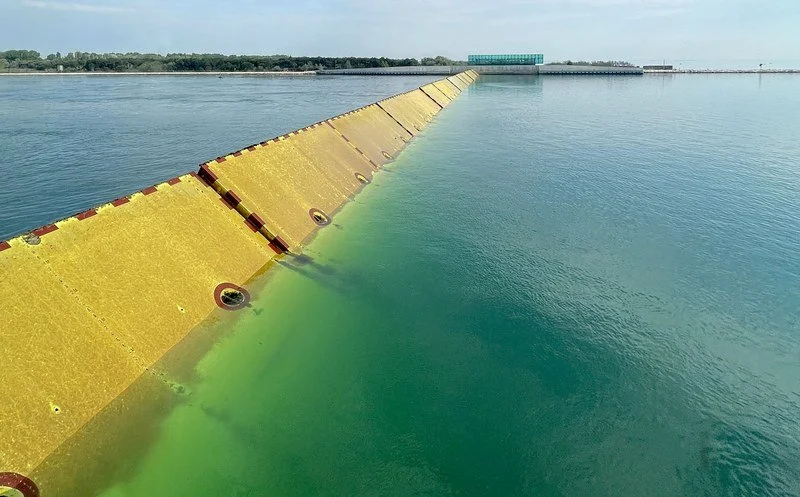
The same principle applies to anticipatory action, or taking steps to mitigate an oncoming disaster when an early warning is issued. According to the World Meteorological Organization (WMO), 24 hours' warning of a storm or heatwave can cut damage by 30%, and early warning systems return more than ten times their cost. These actions can range from ordering early evacuations to relocating livestock or equipment to safer ground or erecting storm and flood barriers. They can be triggered by forecast thresholds, pre-agreed protocols, or expert judgment.
This is where resilience and early action can slow the insurance market's retreat and reduce premium spikes. Losses avoided before a flood are claims insurers never pay. Lower expected losses ease the pressure to reprice, restrict, or withdraw, and they give insurers a measurable reason to keep writing cover in exposed places. ClimateWise notes that the European Insurance and Occupational Pensions Authority (EIOPA) identifies adaptation measures as an effective way to keep insurance available and affordable. Rewarding resilience makes business sense for insurers, because it lowers their costs while keeping revenue streams open.
Where GreenAnt Fits In
At GreenAnt, we are working to bring an innovative form of anticipatory parametric insurance into practice because we see it as a high-impact mechanism to unlock critical resilience funds while keeping communities covered. Here’s how it works:
Desidera, our climate risk analytics platform, applies a coupled modeling architecture and AI-driven calibration to satellite, environmental, and weather forecast data. The result is a set of site-specific, forecast-based disaster thresholds that can be actively monitored to predict disasters before they occur. For example, a threshold might show that 100 millimeters of rainfall over five days will cause flooding at a given site. Desidera then automatically ingests and scans local weather forecasts to look for these thresholds and to predict disasters. It sends automated early warnings when a forecast crosses a threshold. These warnings can serve as anticipatory action triggers.
The ANT, our new framework for anticipatory disaster finance, allows third-party insurers and financial service providers (FSPs) to issue coverage that links Desidera's forecast-based thresholds to pre-agreed payouts. When Desidera recognizes a threshold, it triggers the release of the corresponding payment from the FSP so that funds are available to policyholders before a disaster hits rather than after, as with traditional insurance. While traditional insurance payouts are aimed at compensating future losses, ANT payouts are aimed at funding anticipatory action, which is more cost-effective. In other words, premiums and payouts are priced on the cost of site-level mitigation efforts rather than on climate risk or recovery costs. Early ANT funds are then mobilized by recipients to reduce loss and damage through anticipatory action. This ultimately goes a step further than the premium-subsidy-for-resilience-practice model, creating an even wider off-ramp from the vulnerability spiral that the insurance industry is currently facing.
Fewer losses, faster recovery, and cover that can reach more communities: This is how GreenAnt aims to help foster resilience and narrow the insurance protection gap that the "Sounding the Alarm" memo and the ClimateWise report describe.
Questions Worth Asking
Collecting the resilience dividend will take action across the ecosystem. These questions can help each sector start.
Insurers: Can your policies credit resilience measures and early action? Are your models capturing the full extent of the climate risk your clients face?
Governments: How would your most exposed communities rate on the Insurability Readiness Matrix today, and which investments would move them toward Green? Are there changes your community can make to bolster climate resilience and lower loss and damage in the long term?
Policyholders: Do you know what kind of models your insurance providers use to price your coverage? Is your policy giving you a false sense of security?
Collect the Dividend
"Sounding the Alarm" warns that the insurance industry's default response will push more losses onto households, businesses, and taxpayers. Resilience investment offers a different trajectory: fewer losses, affordable cover, and more capacity to adapt. Together, these give the insurance industry an off-ramp from the vulnerability spiral the ClimateWise report describes.
The evidence shows that money spent ahead of a disaster returns several times its cost. Predictive analytics and anticipatory action let that investment start working before a disaster strikes, preventing loss and damage. Organizations ready to put resilience to work can start with a conversation about their own exposure.