
Breaking the Flood Response Cycle: The Game-Changing Technology That Turns Rainfall Data Into Life-Saving Early Action
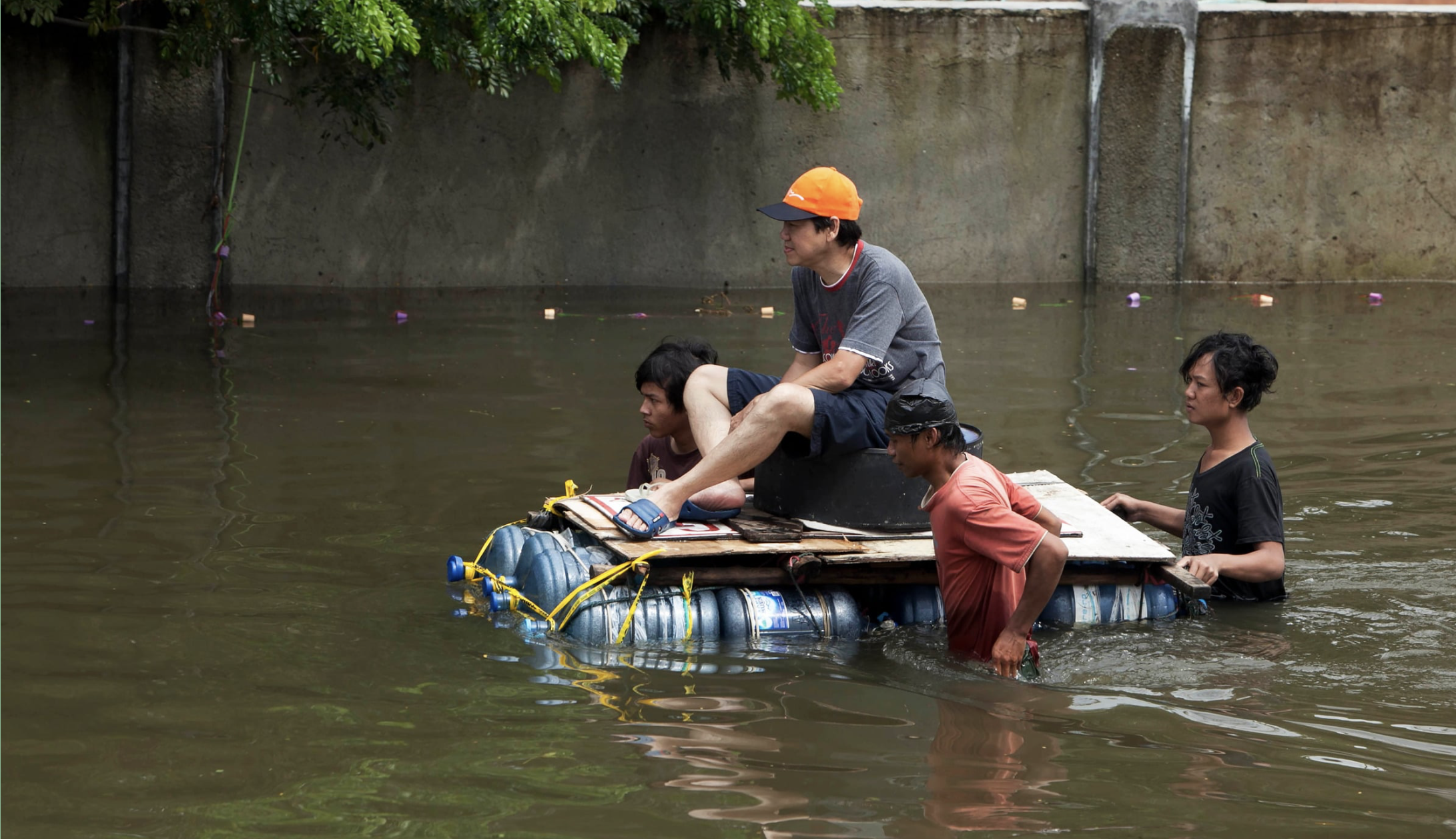
The Staggering Cost of Always Being One Step Behind
Imagine knowing exactly when a flood will hit—not just where, but when—with enough precision to save lives and protect communities before disaster strikes. This isn't wishful thinking anymore.
Every year, flood disasters affect over 250 million people globally. Humanitarian organizations pour billions into responding to natural disasters that could have been prevented with early warning systems. Yet we remain trapped in a devastating cycle: waiting until flood emergencies strike, when human suffering and economic costs reach their peak.
The math is sobering. Reactive flood response costs up to ten times more than proactive flood management. Despite this, most disaster response efforts remain locked in crisis mode, mobilizing only after devastation unfolds.
Revolutionary rainfall-to-flood threshold technology changes everything. Now, organizations can predict when dangerous flooding will occur in specific locations, transforming crisis response into life-saving early action.
The Information Gap That Costs Lives
Here's the problem: Humanitarian organizations monitor flood forecasting and severe weather forecasts, but they're missing the one piece of information that matters most—when will rainfall actually cause flash flooding in their specific area?
This gap creates impossible choices. Emergency response resources get mobilized too late when roads become impassable, or deployed unnecessarily when predicted rainfall never causes flooding. Evacuation procedures are issued when flooding is already underway, forcing families to flee through dangerous conditions instead of relocating safely beforehand.
Insurance companies wait to process claims until after devastating losses occur, missing opportunities to help
policyholders protect property and reduce damages. Emergency management teams are forced to make life-
or-death decisions based on guesswork, lacking precise data for flood risk assessment in their operational areas.
The cascading effect is brutal: delayed emergency response leads to more casualties, greater property damage, and exponentially higher disaster recovery costs.
Why Traditional Prediction Models Are Failing Us
Climate change has shattered the reliability of traditional disaster prediction models. Extreme weather events no
longer follow predictable patterns, deviating dramatically from historical data that organizations have trusted for
decades.
Those "100-year flood" maps? They're becoming meaningless as supposedly rare events occur with alarming frequency. Government agencies and humanitarian organizations find themselves caught between outdated risk assessments and unpredictable new weather patterns, unsure which historical data remains relevant.
Insurance companies face a similar crisis. Traditional actuarial models based on historical climate data can't account for accelerating climate volatility and unprecedented weather events, making pricing and coverage
decisions increasingly difficult.
The compounding effect of model uncertainty forces organizations to layer multiple unreliable predictions when
assessing flood risk, creating exponential margins of error that lead to both missed emergencies and unnecessary mobilizations.
Rainfall threshold technology cuts through this complexity. Instead of trying to predict unpredictable climate behavior, it simply measures when dangerous conditions actually occur, creating model-agnostic accuracy that
works regardless of whether climate patterns follow historical norms or break new ground entirely.
The Breakthrough: Rainfall-to-Flood Thresholding Technology
Here's the game-changer: rainfall-to-flood thresholding technology that calculates the precise amount of rainfall
needed to trigger flooding in each specific location. Instead of vague weather forecasts, decision makers get
actionable flood predictions measured in exact millimeters of rainfall.
GreenAnt's Desidera platform pioneered this approach by integrating hydrological data, satellite imagery, elevation mapping, soil composition, drainage capacity, and land use patterns. The system analyzes how water
moves through each unique landscape to identify the threshold of precipitation that will trigger a flooding event.
The process starts with comprehensive analysis of historical rainfall data and flood event data, identifying precise correlations between documented precipitation amounts and actual flooding incidents. Advanced machine learning algorithms then calibrate each threshold to local flood conditions.
GreenAnt's system continuously validates threshold accuracy by comparing predictions with real outcomes, refining calculations across diverse geographical and climatic conditions. When real-time monitoring detects
that predicted rainfall approaches calculated flood thresholds, the platform automatically triggers threshold-
based early warnings.
The beauty lies in its simplicity: Instead of trying to predict complex hydrological behavior, rainfall thresholding
answers one critical question—"How much rain will it take to flood this specific location?" Armed with this information, stakeholders can then use their everyday weather forecasts in a game-changing way: anticipating
floods. This democratizes sophisticated flood prediction, making it accessible to any organization regardless of
technical capacity. No expertise in hydrology or climate modeling required.
Transforming Crisis Response Into Crisis Prevention
The early warning advantage fundamentally changes how organizations are able to operate, shifting from crisis
response to crisis prevention. Weather forecasts become actionable intelligence, telling decision makers exactly when flooding will occur in their operational areas.
Humanitarian NGOs can deploy emergency supplies and personnel before roads become impassable, ensuring
resources reach communities while transportation infrastructure remains intact. Community protection becomes
proactive: Evacuation orders are issued with sufficient lead time for families to relocate safely and protect their
property, livestock, and livelihoods.
Emergency shelters and distribution centers can be established ahead of need, allowing organizations to coordinate with local partners while communication infrastructure remains functional.
Government agencies gain the ability to pre-deploy emergency services, implement infrastructure protection
measures like controlled dam releases, and coordinate inter-agency responses while logistics remain feasible.
Insurance companies can trigger parametric insurance payouts immediately when threshold-exceeding rainfall
is forecasted, enabling policyholders to take protective action before disaster strikes and reducing overall claim
values.
The Real-World Impact: Lives and Dignity Preserved
The transformation is measurable across every metric that matters. Lives are saved through earlier evacuations
and better preparation, with families reaching safety before dangerous flood conditions develop.
Community dignity is preserved when people receive support before desperation sets in, maintaining social cohesion and reducing trauma from emergency displacement. Organizational effectiveness increases dramatically as resources deploy strategically based on scientific predictions rather than reactive crisis
management.
Cost efficiency improves substantially—proactive deployment requires only a fraction of the resources needed for emergency response and recovery operations. Partnerships with local communities strengthen through reliable early warnings that demonstrate genuine commitment to their safety.
Measurable outcomes include quantifiable improvements in response time, geographic coverage, and overall
impact, allowing organizations to demonstrate clear value to donors and stakeholders.
Seamless Implementation: Ready When You Are
Thanks to its use of satellite data, GreenAnt’s Desidera can be used to analyze land just about anywhere in the world. It integrates seamlessly with existing humanitarian information systems through robust APIs, requiring
minimal disruption to current operations while dramatically enhancing decision-making capabilities.
Organizations build internal capacity for threshold-based decision making through targeted training programs
that help staff transition from reactive to proactive response protocols. Pilot programs in high-risk areas provide
immediate opportunities to demonstrate value and build confidence in threshold-based early action.
Successful implementation requires coordination among humanitarian organizations, government agencies,
and commercial stakeholders to align early action protocols and maximize collective impact.
The platform's scalability means threshold coverage expands automatically as the system processes data from
additional regions, creating network effects that benefit all users. Continuous improvement is built in—accuracy
increases over time as more rainfall and flood events provide additional data for algorithm refinement.
The Future is Proactive—And It's Here Now
The fundamental shift from reaction to anticipation is no longer a distant goal. Scientifically validated rainfall-to-
flood thresholds eliminate guesswork from disaster response, giving humanitarian leaders the tools to embrace
trigger-based early action.
Communities can be protected before floods arrive rather than rescued afterward. Advanced flood prediction has been democratized, making sophisticated early warning capabilities accessible to organizations of all sizes and resource levels.
The technology exists. The methodology is proven. The only remaining question is how quickly humanitarian and business leaders will deploy these tools to save lives and transform disaster response.
Ready to break the flood response cycle? Contact GreenAnt today to learn how Desidera's rainfall-to-flood thresholding technology can transform your organization's emergency response capabilities.